// THE HEADLINE RESULT
Delegates at a major nephrology congress queued to step inside the experience, and the client commissioned a VR version within six months of the first delivery.
What It Achieved
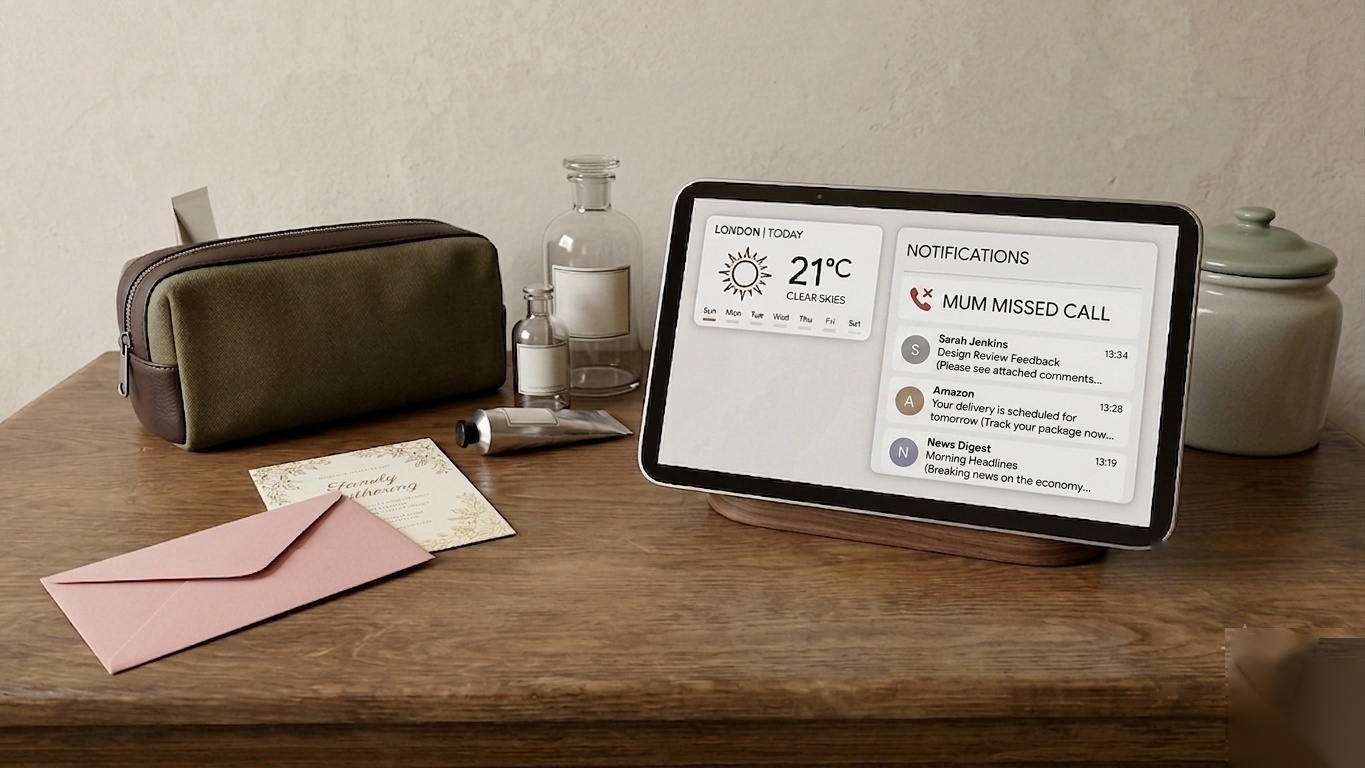
The brief was to increase the awareness of CKD symptoms and how they fit within a patient environment. By using a series of key indicators in each room, such as a hardly used exercise bike, or missed calls from family, it drove home the impact of someone living with this condition. On the congress floor it drew a consistent crowd and generated some very detailed conversations. The positive feedback led to a virtual reality version of the touchscreen app being used for future congresses.
12
INTERACTIVE HOTSPOTS
Each hotspot tied to a specific CKD symptom or daily living impact, discovered by delegates at their own pace across five rooms
3+
CONGRESSES DEPLOYED
The experience was re-deployed across multiple international nephrology congresses after its initial launch
2
DELIVERABLES BUILT
The client commissioned a virtual reality version of the touchscreen experience within six months of the initial delivery.
"We were impressed by the level of detail and the way it brought the patient's experience to life. It was a powerful tool for building empathy among healthcare professionals."
AGENCY LEAD · GLOBAL PHARMA CLIENT · INTERNAL REVIEW
// RECOGNITION & AWARDS
◆
Nominated for an MM&M industry award for best use of immersive technology in healthcare
GLOBAL PHARMA CLIENT · NEPHROLOGY CONGRESS
◆
Cited internally as a benchmark for patient empathy content across the wider brand team
MEDICAL COMMUNICATIONS AGENCY · INTERNAL REVIEW
Years of Continued Development
The experience was so positive that the client wanted it adapted for VR. What began as a single congress build became an ongoing programme of patient environment work, covering different CKD stages and patient profiles across their nephrology portfolio.
Second updated VR version created within six months of the initial delivery
Re-deployment across three international nephrology congresses
Adapted and updated content at regional HCP events
The Context
// WHAT WAS NEEDED
The client needed a congress activation that could communicate the lived reality of CKD to nephrologists, renal nurses and primary care physicians in a way that clinical messaging alone could not. The disease is largely invisible to the outside world and frequently underestimated even by the HCPs managing it. What does persistent fatigue actually do to a person's ability to stay connected to their family, maintain their home, or keep up with the physical activity they were told would help? The brief was to build empathy at scale, to make HCPs feel the weight of that gap rather than simply receive data about it. A touchscreen version was developed initially almost as a proof of concept, with the promise of a more immersive experience for future events.
THE BUILD
I developed a fully navigable multi-room 3D environment in Unity. The environment was the home of a fictional CKD patient, with a bespoke room-to-room navigation system and a click-to-discover interaction layer. Players moved through five rooms at their own pace, finding twelve interactive hotspots embedded in the environment. Each discovery was scored and tracked, giving delegates a sense of the cumulative weight of the condition across a single day.
- Five fully navigable real-time 3D rooms: living room, dining room, kitchen, office and bedroom, each lit and dressed to feel genuinely lived-in
- Bespoke room-to-room navigation system with persistent score tracking and 12 interactive hotspot indicators, each tied to a specific CKD symptom or daily living impact
- Categorised hotspot system with distinct icon types for physical, social and daily-living impacts, giving delegates a framework for understanding the breadth of the disease burden
- Optimised for both high-spec desktop and VR Meta Quest 2, with the same experience running reliably across both deployment targets